
Core science themes of Space Weather Munich
The group studies how solar activity, plasma sources, particle energization, and magnetosphere-ionosphere coupling affect the plasma environment from Earth to other planets
© NASA
Space weather prediction
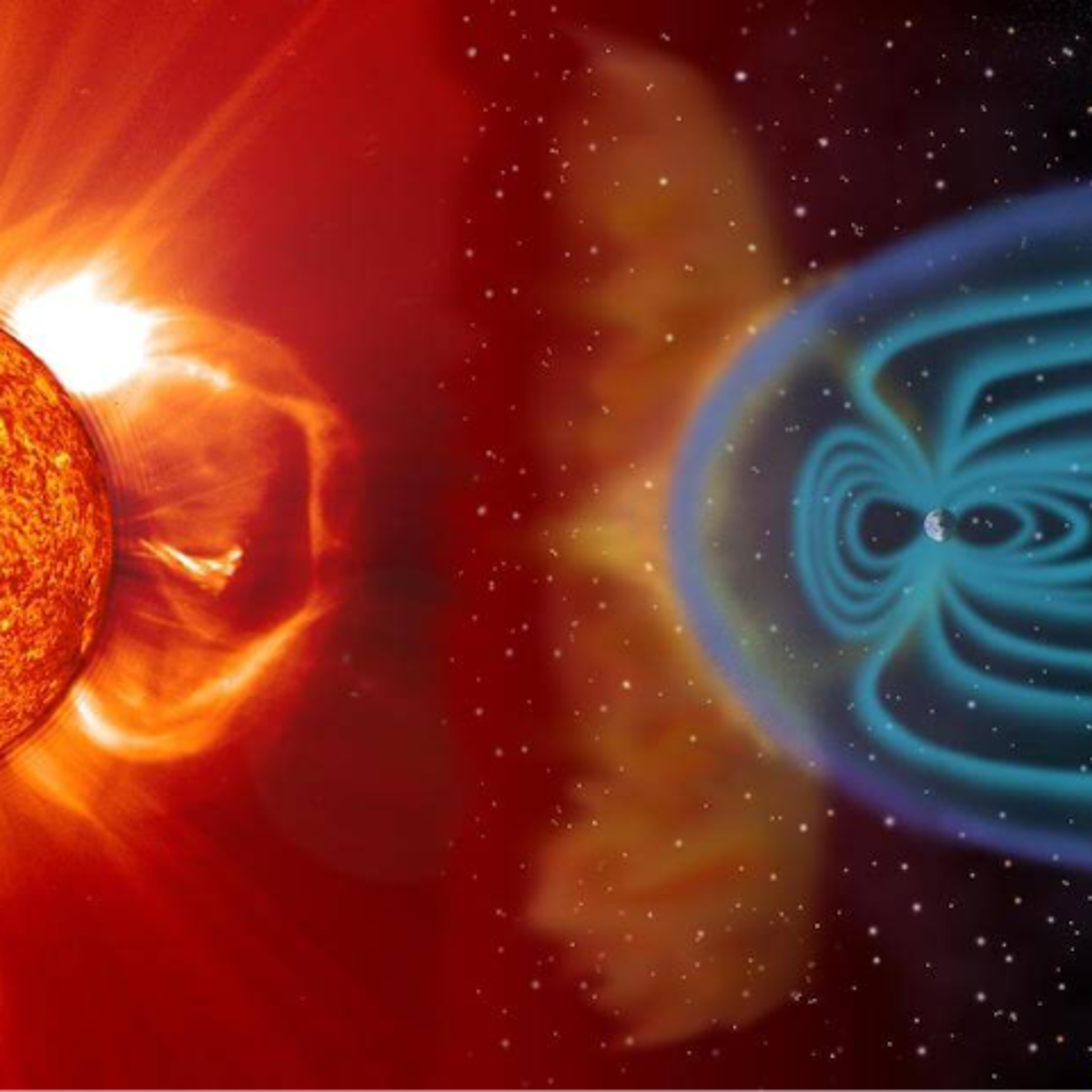
Space weather affects numerous aspects of our everyday life. It can be hazardous for satellites, navigation systems, avionics, air travel, telecommunications, and others. The prediction of space weather is also crucial for manned space exploration and for keeping space observation technology safe. We predict Earth's space plasma environment using satellite observations, machine learning, and physics-based models. Our group develops predictive models for electron and ion populations in near-Earth space. For example, we model soft proton fluxes to protect space observatories such as XMM-Newton, SMILE, and NewAthena from contamination. We also conduct cross-calibration activities between observations from different instruments and space missions and create new data products characterizing the space environment
© Elena Kronberg and Herting
Plasma energization and transformation
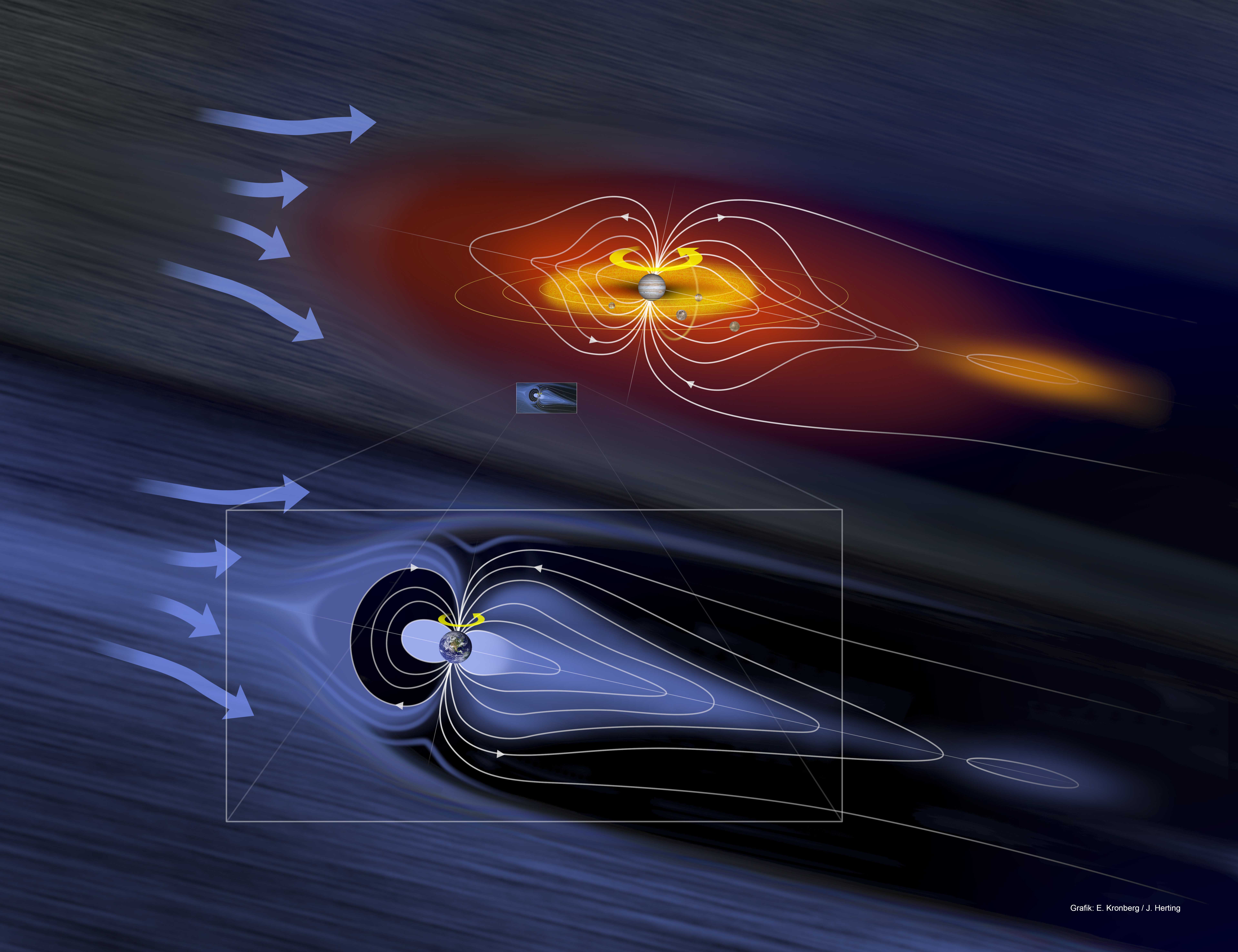
Many plasma objects in space are powerful accelerators of plasma particles capable of increasing particle energies by many orders of magnitude. Important impulsive energetic phenomena in the Universe include gamma-ray bursts, supernovae, astrophysical jets, solar flares, and coronal mass ejections. Underlying physical mechanisms such as shocks, magnetic reconnection, associated high-speed plasma flows, and waves challenge our understanding of how space plasmas can transform energy from one form to another. We investigate how charged particles gain energy through these processes in space plasma environments such as Earth and Jupiter
© Elena Kronberg
Plasma composition and magnetospheric dynamics
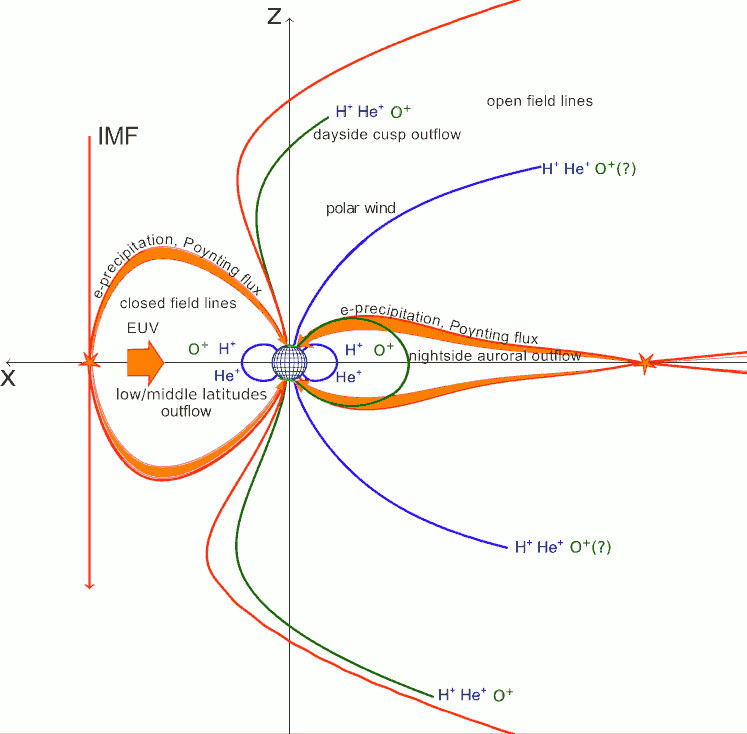
Ionospheric ion outflow impacts magnetospheric dynamics. The presence of ionospheric ions affects plasma properties by changing the plasma density, temperature, and pressure. These modified properties, in turn, influence the development of plasma instabilities and wave generation. On large scales, ionospheric ion outflow alters the shape of the magnetosphere. Outflow affects substorm-like events, magnetic storms, dynamics of radiation belts, and magnetosphere-ionosphere-ring current coupling. However, studies on many of these effects are still controversial. At Jupiter, the volcanic moon Io contributes to the diverse ion composition, whose influence on plasma dynamics remains an open question. We study ion composition and how it modifies plasma processes and planetary magnetospheric dynamics
© Elena Kronberg
Magnetosphere-Ionosphere-Thermosphere coupling
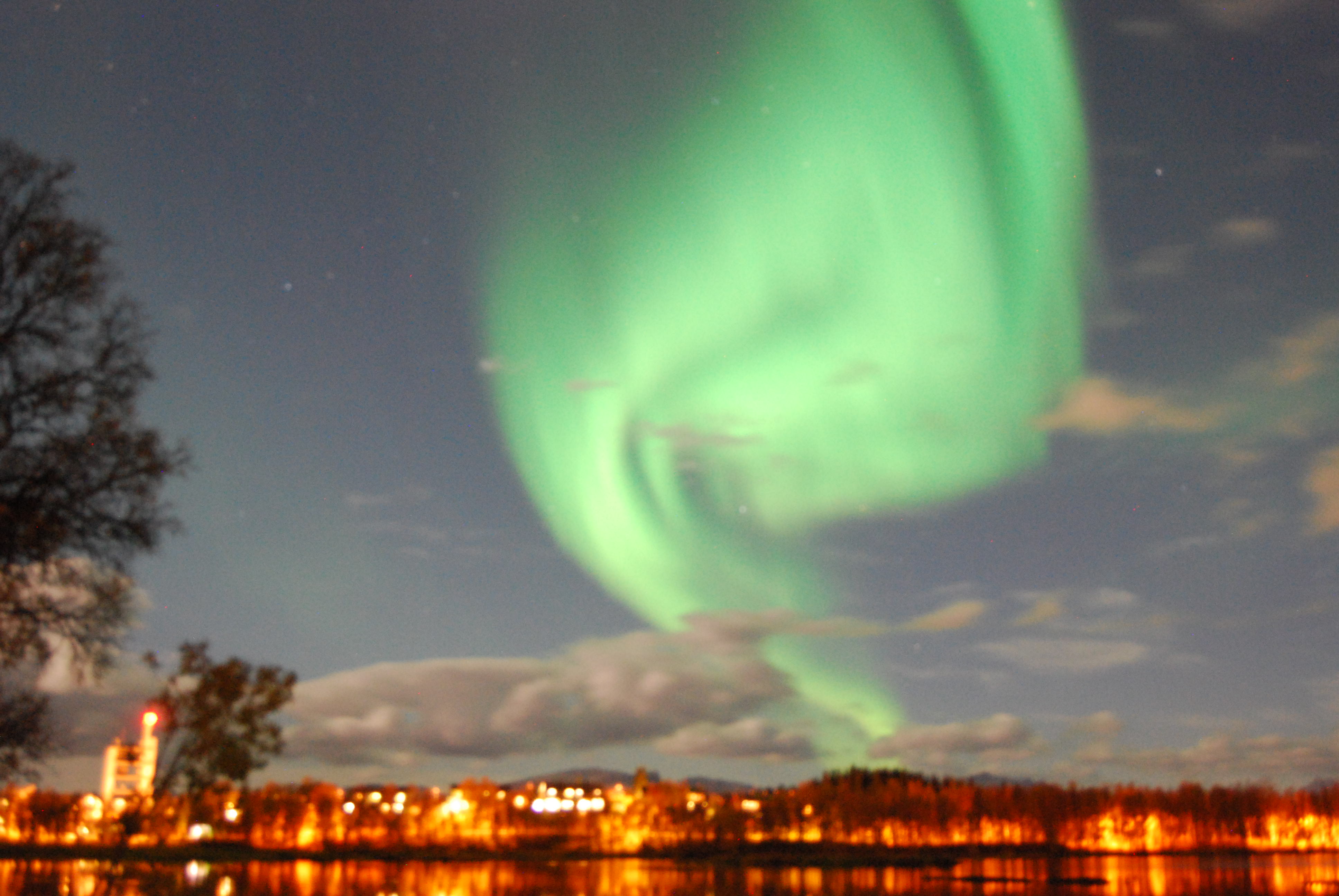
The solar wind inputs energy through the magnetosphere into the ionosphere and the thermosphere. This constitutes the second major energy source in Earth's atmospheric dynamics, after ultraviolet radiation from the Sun. The mechanisms of this energy transfer are not yet well understood. We combine spacecraft observations, machine learning, and physics-based models of the magnetosphere with ionospheric and thermospheric data to elucidate the physical mechanisms behind this coupling
Want the model-oriented view?
The models page lists current empirical and machine-learning models developed or used by the group.